
The future of any academic institution is ultimately shaped by its stakeholders. In the case of universities, these stakeholders include students, faculty, researchers, employees, industry partners, alumni, policymakers, and the broader community. It is through their collective engagement that institutions either flourish or decline.
Khyber Pakhtunkhwa has long been home to some of Pakistan’s most distinguished centers of higher learning. Islamia College, now Islamia College University, was founded in 1913 and occupies a unique place in the educational and political history of the region, having been honored by multiple visits from Quaid-e-Azam Muhammad Ali Jinnah. The province is also home to the prestigious University of Peshawar (1950), Gomal University (1974), and the University of Agriculture Peshawar (1981). More recently, institutions such as the University of Malakand (2001), The University of Haripur (2012), the Pak-Austria Fachhochschule: Institute of Applied Sciences and Technology (PAF-IAST) in Haripur (2019), UET Mardan (2018), and several other rapidly developing universities have further expanded the higher education landscape of the province.
Like many academic institutions across Pakistan, some universities in Khyber Pakhtunkhwa face financial pressures and structural challenges. However, it is equally important to acknowledge the measures taken by the provincial government to address these concerns. The Government of Khyber Pakhtunkhwa has provided emergency bailout packages to financially stressed institutions, increased annual allocations for higher education to more than Rs. 50 billion, and supplemented universities with billions of rupees in pension support. Furthermore, under the principle of “Taleem Ka Insaf,” the government has repeatedly emphasized transparency, merit, accountability, and the rule of law. The fact that inquiries and fact-finding investigations involving a number of Vice Chancellors from various universities are currently underway demonstrates a commitment to the principle that no individual, regardless of position, is above the law.
Over the years, the provincial government has sought to strengthen higher education through merit-based governance, reduced political interference, and performance-based assessments of universities, departments, and, more recently, Vice Chancellors. A review of international ranking systems, including Times Higher Education and QS Rankings, indicates that universities in Khyber Pakhtunkhwa have generally improved their standing in recent years. Similarly, the performance of Quality Enhancement Cells (QECs) across the province has shown encouraging progress. Such achievements are not accidental; they are the result of continuous monitoring, institutional assessment, and corrective interventions aimed at improving quality and performance.
At the same time, significant challenges remain. The Directorate of Science and Technology, the Higher Education Department, PASTIC, and other relevant organizations continue to play important roles in strengthening the knowledge economy. Yet universities still face difficulties in translating research into innovation, locally developed technologies, commercial products, and sustainable industrial partnerships. These challenges are well understood by policymakers, and efforts are underway to address them.
There is also a less visible challenge that deserves attention: institutional culture. In some cases, university leaders become surrounded by individuals who repeatedly describe them as visionaries while discouraging meaningful criticism and independent scrutiny. This recalls a famous story about Caesar, who was known for punishing those who attempted to flatter him. Yet when a beggar approached him and declared, “O Caesar, you cannot be flattered,” Caesar was immediately flattered. The lesson is timeless. Institutions thrive when evidence, accountability, and constructive criticism are valued more highly than personal admiration and unquestioning loyalty.
Public demonstrations and organized resistance rarely emerge without cause. They often arise when individuals feel that their voices are not being heard, their rights are being overlooked, or decision-making processes have become excessively centralized. One of the strengths of Pakistan, and particularly of Khyber Pakhtunkhwa, is that peaceful resistance against perceived injustice continues to exist within democratic and institutional frameworks. In many instances, those who raise concerns are not outsiders but individuals who have served the system with distinction and possess highly respected professional credentials. To assume that every minority group challenging authority is incompetent, corrupt, or driven by personal motives ignores countless examples throughout political, social, and religious history. Indeed, history repeatedly demonstrates that minorities are sometimes the very groups willing to challenge entrenched injustices.
The financial sustainability of universities also deserves serious discussion. What happens when an institution relies primarily on student fees and bank investments as its principal sources of revenue while paying insufficient attention to national and international development grants, industrial collaborations, research commercialization, technology transfer, and other sustainable income streams? Universities that aspire to long-term excellence must diversify their funding sources and actively engage with industry, society, and international partners. Those who possess a proven record of securing funding and contributing to institutional development have both the expertise and the responsibility to speak when they believe a university is moving in an unsustainable direction.
Equally important are questions of governance and institutional priorities. What if mobile-based online examinations are introduced without an approved policy framework? What if the HEC-recommended teacher-to-student ratio of 1:20 rises to 1:200 in certain departments? What if a Science and Technology Park is publicly inaugurated through the unveiling of a commemorative plaque by a former Chairman of the Higher Education Commission, yet the promised facility never materializes? What if a Business Incubation Center is downsized, funds are utilized through non-statutory departments, employee seniority structures are significantly altered, associates from previous organizations are repeatedly appointed to key committees and decision-making bodies, and millions of rupees are spent on training activities that do not align with the university’s strategic plan or ORIC priorities?
These are legitimate questions that deserve transparent examination. There may be many additional concerns that cannot be discussed within the limitations of a newspaper article. Nevertheless, such issues underscore the importance of accountability, evidence-based decision-making, and effective oversight. It is encouraging that several matters are already subject to inquiry and review. Yet even these concerns should not distract from the larger challenge confronting higher education in Pakistan: transforming universities into engines of productive research, innovation, entrepreneurship, technological advancement, and solutions to local societal needs. This broader transformation remains the most important objective and one on which the provincial government appears increasingly focused.
In conclusion, universities in Khyber Pakhtunkhwa face challenges, just as universities across Pakistan do. However, it would be inaccurate to portray the entire sector solely through the lens of crisis. These institutions continue to educate thousands of students, produce research, serve society, and pursue academic excellence with the support of the provincial government. Accountability remains essential, particularly where allegations of administrative shortcomings, governance failures, statistical misrepresentation, or other irregularities are under investigation. In such circumstances, institutional interests must take precedence over personal reputations, and the rule of law must prevail over individual influence.
We place our trust in Allah and in the institutions of our provincial and national governments. At the same time, we should be mindful of the narratives we promote about our universities. Portraying the higher education sector as being in perpetual crisis may have unintended long-term consequences for the international recognition of Pakistani degrees and for Pakistan’s reputation as a country committed to knowledge, innovation, and academic excellence. The better path is neither denial nor pessimism. We should remain critical where criticism is warranted, optimistic where progress is evident, and committed to building institutions rather than personalities. Ultimately, it is strong institutions, respect for the rule of law, and a culture of accountability that will secure the future of higher education in Khyber Pakhtunkhwa and Pakistan as a whole.
About the Author
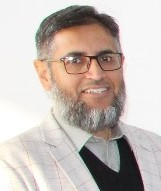
Dr. Muhammad Jahangir received his PhD and postdoctoral training from Leiden University, The Netherlands. He is a policy advocate, teacher, researcher, entrepreneur, and administrator. He currently serves as Associate Professor at The University of Haripur and is a member of multiple regulatory and legal committees at the national, provincial, and local levels.
Email: mj_awan@hotmail.com
