
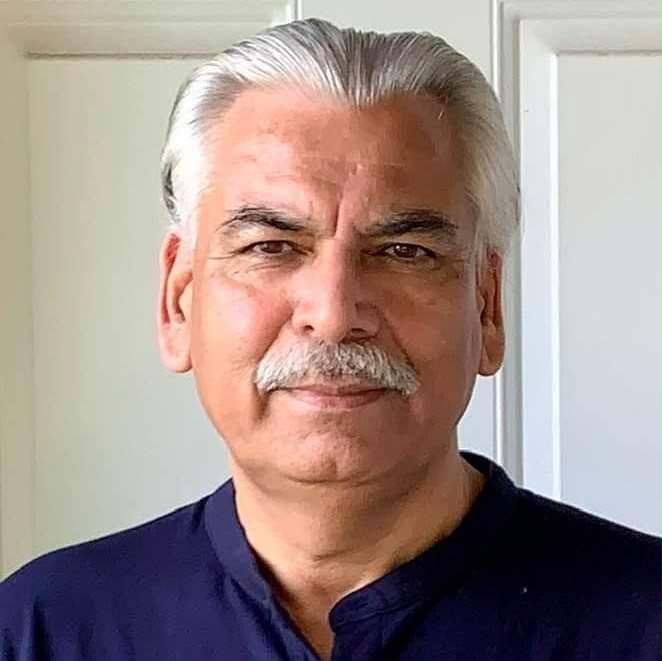
Barrister Usman Ali, Ph.D.
Nations are not always brought down by enemies from outside. Sometimes they weaken themselves from within: institutions are hollowed out, principles are sacrificed for expediency, personalities are placed above the law, and then, when the damage is done, everyone asks:
How did we get here?
Pakistan’s story, in many ways, is the story of that question.
We were meant to build a system in which Parliament represented the people, the judiciary upheld justice, the military defended the country, the civil service served the state, and the media acted as society’s eyes and ears. More than seven decades later, we have to admit that many of these institutions have still not acquired the stability and public trust a durable state requires.
There is no single cause and no single culprit.
But one distinction is crucial: responsibility may be shared, but power is not. The greater the authority, the greater the responsibility. Collective responsibility must never become a way of absolving those who possessed the greatest power. It simply means that no one gets to deny their own part in what went wrong.
Military interventions repeatedly broke Pakistan’s democratic continuity. Constitutions were suspended, elected governments removed, and political development interrupted. But to place the entire failure of democracy at the feet of generals would still tell only part of the story. Military rulers found politicians and parties willing to work with them. Civilian politicians, too, have sought help from unelected centres of power when it suited them.
A damaging rule gradually took hold:
If unconstitutional interference hurts us, it is dictatorship. If it helps us, it is expediency.
The judiciary cannot be exempt from this reckoning either. A judge’s loyalty is not to a government, party, popular leader or powerful institution. It is to the Constitution, the law and justice. Because judicial decisions can determine a person’s fate, remove elected leaders or reshape the constitutional order, the judiciary carries an exceptional burden of restraint and impartiality.
Pakistan’s legal history contains decisions that later generations, and, at times, the judiciary itself, have had reason to revisit. Zulfikar Ali Bhutto was executed following a judicial process that the Supreme Court, decades later, concluded had failed to meet the requirements of a fair trial and due process. At other moments, the higher judiciary gave legal cover to military rule and even granted a military ruler limited authority to amend the Constitution.
A judiciary that remains above political passions, resists pressure and the pull of popularity, and applies the same principles to friend and foe protects its independence through its own conduct. That is why a difficult question deserves to be asked: had public confidence in judicial impartiality and self-restraint remained stronger, would there have been the same political space for far-reaching changes such as the Twenty-Sixth and Twenty-Seventh Amendments?
People may disagree about those amendments, but the broader principle remains:
Institutions are not protected by constitutional clauses alone. They also protect themselves by how they exercise power.
The civil service suffers from a similar problem. A public servant works for the state, not for the government of the day. But when promotions and postings depend more on political favour than competence, loyalty begins to outrank merit.
The media is hardly blameless. Journalism is supposed to question power and separate fact from opinion. Yet parts of the media have too often behaved like political advocates. Social media has also given extraordinary reach to misinformation, character assassination and half-truths.
We share before we read, judge before we verify, and attack motives before hearing arguments.
Freedom of expression is indispensable. But its strongest defence is responsible journalism.
Then there is terrorism and extremism, the wound that has scarred Pakistan for decades. More than 90,000 Pakistanis have lost their lives to terrorism and extremism, yet we still struggle to sustain a national consensus on the roots of the problem and the path to ending it.
The roots of this crisis are complex and interconnected, involving foreign intervention, the wars in Afghanistan, past state policies, and the rise of religious and sectarian extremism. No single factor can explain a tragedy of this scale. Yet perhaps the most painful truth is that, even after paying such a heavy price, we have continued to politicise terrorism.
Whether the question was negotiation or military action, national consensus repeatedly gave way to political division. After so much bloodshed, one principle should no longer be negotiable: anyone who takes up arms against the state and society must be rejected, regardless of name, slogan or ideology.
Force alone will never be enough. Defeating extremism also requires justice, education, jobs, religious tolerance, effective law enforcement and a national outlook that leaves no moral space for violence.
Education is part of the same national failure. Millions of Pakistani children remain out of school. That is not merely an education problem; it is a threat to our social and political future.
When books lose their influence, slogans gain power very quickly.
Our economic behaviour reflects the same contradictions.
We want taxation, but for someone else.
We want austerity, but in someone else’s budget.
We want accountability, but for our opponents.
We want sacrifice, but from others.
We speak endlessly of democracy while hesitating to devolve real authority to neighbourhoods, towns, cities and districts. Yet for an ordinary citizen, democracy is not merely Parliament. It is clean water, a functioning school, a hospital, decent roads and a local government that can be held to account.
Population growth, water shortages, environmental pressures, energy and employment all demand serious attention. Yet much of our politics remains consumed by the next election, the next court battle and the next struggle for power.
And then we ask:
Who is to blame?
The military? Politicians? Judges? The bureaucracy? The media? Religious leaders? The public?
The honest answer is that Pakistan’s failures cannot be laid at the door of one institution while everyone else declares themselves innocent.
We are all part of this story. But we have never had equal power.
Those who held greater authority must bear greater responsibility.
The greater the power, the greater the responsibility.
When constitutional boundaries were crossed in favour of the side we supported, many of us stayed silent. When our preferred politician abandoned a principle, we called it strategy. When a court ruling went our way, we celebrated justice; when it went against us, we questioned the whole institution. We excused in our own leaders the conduct for which we condemned their opponents.
As Munir Niazi once suggested in a memorable verse, the cruelty of others may be real, but so too may be our own part in walking towards ruin.
Those who violated the Constitution must acknowledge it. Those who gave unconstitutional acts legal cover must do the same. Those who benefited politically from undemocratic arrangements must own their part. Those who allowed justice to be influenced by pressure or preference must reflect on theirs. Those who turned journalism into propaganda, those who used religion to spread hatred or violence, and citizens who looked away from the wrongdoing of their own political side must all face the mirror.
The military’s strength and honour lie in remaining within its constitutional role. A politician’s strength lies in the people and Parliament. The judiciary’s greatness lies in impartial justice. The civil service earns respect through fidelity to law. Journalism derives its power from truth. Citizens show maturity when they ask the same questions of the leaders they admire as they ask of those they oppose.
For too long, we have searched for saviours, in uniform, in political office, in judicial robes and in charismatic public figures. We keep expecting one person to do what only a functioning system can do.
But nations are not saved by messiahs.
They are sustained by strong principles, functioning institutions, constitutional supremacy, education, justice, responsible leadership and informed citizens.
Perhaps it is time to stop asking:
Who will save us?
And start asking:
When will we build a Pakistan that no longer needs a saviour?
That journey will not begin by cataloguing everyone else’s failures. It will begin when each of us is willing to acknowledge our own.
We must look back, not for revenge, but for lessons. Our goal should not be to defeat one another, but to ensure that Pakistan wins.
Otherwise, the names will change, the faces will change and the slogans will change, but the story will remain the same.
And the mirror will keep giving us the answer we have avoided for far too long:
We are all in the dock.
