
By Siraj Bhaagat
For years, I had only seen photographs and documentaries about the mysterious Kalash Valley its vibrant people, colorful festivals and breathtaking landscapes hidden deep within the mountains of Chitral. Finally, this year, I got the opportunity to witness the historic Chilam Joshi Festival, one of the most important cultural celebrations of the Kalash people.
Located in the Chitral District of Khyber Pakhtunkhwa, the three Kalash valleys Bumburet, Rumbur, and Birir lie surrounded by the rugged peaks of the mighty Hindukush Mountains. Every year from May 13 to 17, the Kalash community celebrates Chilam Joshi to welcome the arrival of summer with music, dance, rituals and communal gatherings.
My journey began from Islamabad. Traveling by road to Chitral took nearly eight hours, followed by another two-hour drive to Kalash Valley. The route from Chitral to Bumburet was scenic yet challenging, with rough mountainous roads where a 4×4 vehicle is highly recommended. However, every difficult turn on the road felt worthwhile as the valley slowly revealed its unmatched beauty.
By the time I arrived in Bumburet, the largest of the three valleys, preparations for the festival were already underway. The Kalash people, known for their distinct culture and ancient traditions, have been living in these valleys for centuries. According to local legends, they are descendants of the soldiers of Alexander the Great who arrived here during his Indian campaign in 326 BC, although historians continue to debate this claim.
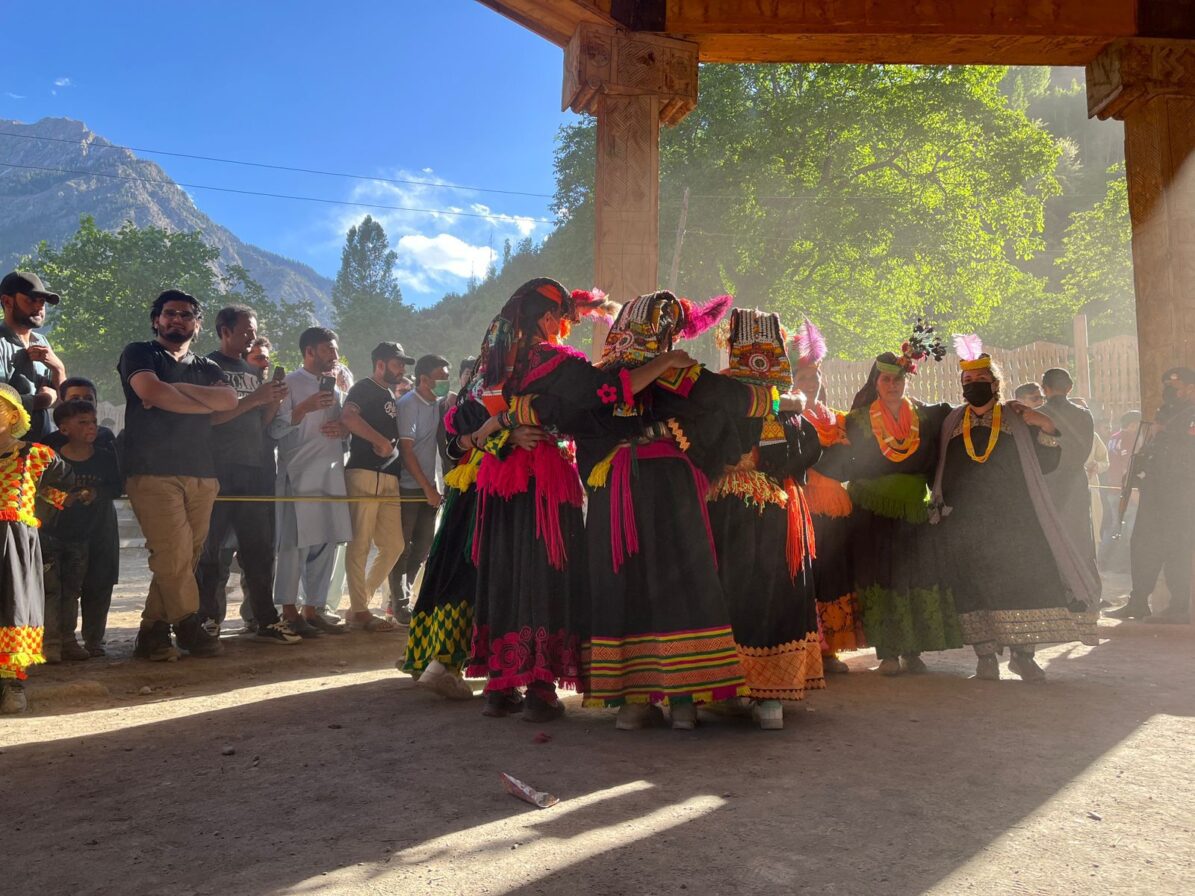
The festival atmosphere was truly mesmerizing. People descended from the mountains wearing their traditional dresses adorned with colorful embroidery, beads, and headpieces. Drums echoed through the valley as groups gathered in open spaces to sing and dance a symbol of joy, unity and gratitude for nature’s blessings.
What impressed me most was the hospitality of the Kalash people. They welcomed visitors with warmth and open hearts. Their lifestyle remains simple, peaceful and deeply connected to nature. Most houses are beautifully designed with wood and stone, reflecting centuries-old architectural traditions. According to the Khyber Pakhtunkhwa Tourism Department, around 4,000 people currently live in the valley, primarily relying on agriculture, handicrafts, tourism and government employment.
Kalash society is often described as comparatively progressive and women-centered. Women actively participate in social life, cultural activities and decision-making processes. During the festival, however, strict security measures were in place and tourists were advised to respect local customs, particularly regarding photography of Kalash women.
As the festival reached its final night, the valley transformed into a magical cultural arena. Kalash men and women danced together in circles to the rhythm of traditional drums while elders narrated stories, myths, and legends of their ancestors. Visitors from Denmark, Switzerland, the United Kingdom, and various parts of Pakistan attended the celebrations. Students from universities across the country also traveled to Kalash to experience this unique cultural gathering.
An exhibition of precious stones and traditional Kalash artifacts was also organized by local residents. The displayed items, many excavated from the mountains of Chitral, reflected the valley’s rich archaeological and artistic heritage.
Yet behind the celebrations lies a growing concern. Several residents spoke openly about the cultural pressures faced by the Kalash community. A local resident, expressed concern over increasing attempts by religious groups to convert members of the community. Others worried that uncontrolled tourism and rapid demographic changes could threaten the originality and identity of the valley.
These concerns cannot be ignored. Kalash is not merely a tourist destination — it is a living civilization carrying centuries of indigenous knowledge, traditions, and beliefs. Without proper protection, responsible tourism policies, and cultural preservation efforts, this rare heritage may gradually disappear.
The inclusion of Kalash Valley on UNESCO’s tentative World Heritage list offers hope for the future. But preserving this culture requires more than international recognition; it demands respect, awareness, and collective responsibility from both the state and society.
As I left the valley, the sound of drums still echoed in my mind. Chilam Joshi was more than a festival it was a reminder that Pakistan’s true beauty lies in its cultural diversity. The Kalash people continue to preserve a civilization unlike any other, and it is our responsibility to ensure that future generations can witness the same vibrant traditions, dances, and stories that still thrive in the hidden valleys of Chitral today.
