
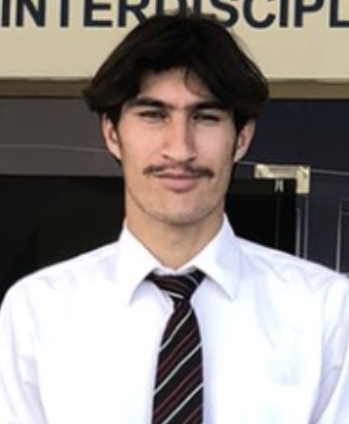
Uzair Ahmad
Behind Chitral’s beauty and loyalty lies a deeper question about fairness, development, and recognition. A region that consistently contributes to the country through talent, resources, and sacrifice naturally raises one important question: should it not receive equal priority in development?
Chitral occupies a unique place in Pakistan’s history as a region that voluntarily acceded to the country and has since remained closely tied to it through loyalty, service, and sacrifice. The people of Chitral joined Pakistan with the hope that it would bring political freedom, including independence from British colonial rule and an end to the traditional princely system under the Mehtar. From the very beginning, their expectation was not just inclusion, but equal development and opportunity.
In the early years after independence, Chitrali civilians also took part in the Kashmir conflict against India in support of Pakistan.
However, it is difficult to ignore the imbalance when we look at development. For decades, the most important connection between Chitral and the rest of Pakistan was the dangerous Lowari Pass, where many lives were lost due to harsh weather and difficult terrain. The Lowari Tunnel eventually provided relief, but it came after long delays and remains the most significant development project in the region. In my view, this shows how slowly large-scale development has reached Chitral compared to its contributions.
Despite these limitations, Chitral has continuously produced individuals who represent Pakistan at national and international levels, especially in sports. Alamgir Ghazi became captain of the Pakistan football team, Afan Ahmad from Ayun represented Pakistan in a football tournament in Norway, Karishma Ali emerged as one of Pakistan’s pioneering female footballers, and Saira Jabeen represented Pakistan in women’s cricket. What makes these achievements even more meaningful is that they came from a region where proper football grounds, academies, and training facilities are still lacking.
Chitral has also made important contributions to national security. Many Chitralis have served in the Pakistan Army and police forces, and a significant number have sacrificed their lives in the line of duty. This reflects, in my opinion, a level of patriotism that deserves greater recognition and equal investment in return.
In the field of health and education, professionals such as Dr. Zubaida Sirang have also brought recognition to Chitral through her work in ophthalmology and published contributions. This shows that even without strong institutional support, individuals from Chitral continue to reach national and international platforms.
Economically, Chitral contributes through projects like the Golen Gol Hydropower Project, along with tourism and natural resources that support Pakistan’s energy production and local livelihoods. These are significant contributions, yet they are often not matched with equal investment in social infrastructure.
At the same time, basic development challenges remain serious. Higher education opportunities are limited, healthcare facilities are insufficient, and road networks remain vulnerable and underdeveloped. In many areas, internet and mobile connectivity is still unreliable, which in today’s world creates a sense of isolation and exclusion.
In my opinion, Chitral represents a clear imbalance between contribution and development. It has consistently given Pakistan talent, soldiers, professionals, and resources, yet still faces gaps in basic public services and infrastructure. This is not meant as a complaint, but as a question of fairness: whether regions that contribute so much should also receive development in proportion to their sacrifices and potential. The state should give priority to such regions which have strong potential in talent, tourism, and natural resources, so that this potential can be fully developed for the benefit of the whole country
