
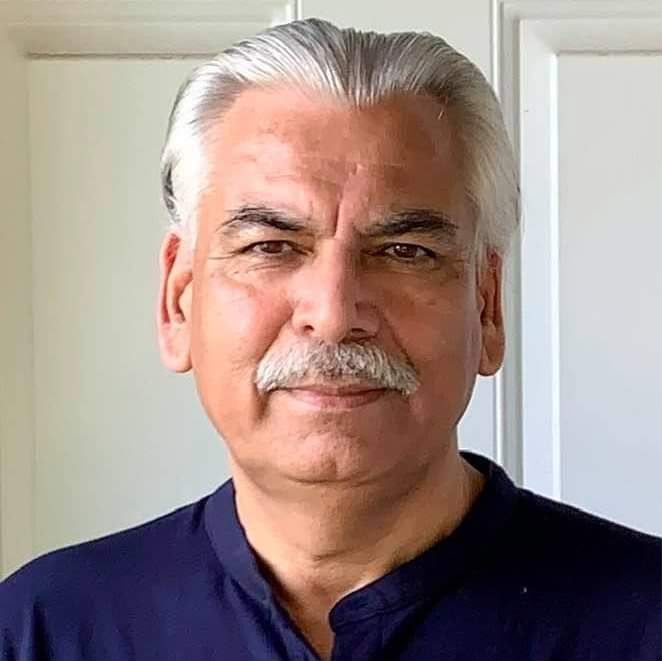
Barrister Usman Ali, Ph.D.
The Audio Leaks Commission was established to answer troubling questions about alleged interference in Pakistan’s judicial system. Instead, it became the centre of a constitutional battle over whether those questions could ever be independently examined.
Every constitutional democracy eventually confronts the same question: who ensures accountability when serious allegations concern the administration of justice itself? The answer can be neither political expediency nor institutional silence. Judicial independence is indispensable to the rule of law, but public confidence in that independence ultimately depends upon the existence of credible and impartial mechanisms through which serious allegations can be fairly examined.
Independence and accountability are not competing constitutional values; they are complementary safeguards. One protects judges from improper influence, while the other preserves public confidence in the integrity of the judicial institution.
The 2023 Audio Leaks Commission brought this constitutional tension into sharp focus. Although the controversy began with leaked telephone conversations allegedly involving members of the higher judiciary, lawyers, politicians and individuals connected with judicial proceedings, it soon developed into something much larger. Instead of examining whether the allegations arising from those recordings were true or false, the constitutional debate shifted to whether the Commission itself could lawfully investigate them. Consequently, the mechanism established to discover the truth became the subject of litigation, while the truth it was intended to uncover remained unexamined.
On 19 May 2023, the federal government constituted the Commission under the Pakistan Commissions of Inquiry Act, 2017. Justice Qazi Faez Isa, then the senior-most judge of the Supreme Court, was appointed its chairman, while Chief Justice Aamer Farooq of the Islamabad High Court and Chief Justice Naeem Akhtar Afghan of the Balochistan High Court were appointed as members.
The Commission was tasked with determining whether the leaked recordings were authentic, accurate, manipulated or fabricated. It was also required to examine whether they disclosed violations affecting the integrity of the judicial process, the independence of the judiciary, the right to a fair trial or the equality of citizens and, where appropriate, to identify responsibility and recommend legal or disciplinary action.
According to the federal government, the recordings had raised serious concerns about the independence, impartiality and integrity of judges of the superior courts, thereby undermining public confidence in the judiciary. Some of the recordings allegedly concerned the formation of judicial benches, attempts to influence judicial proceedings, expectations regarding court decisions and the political use of judicial relationships. Whether these allegations were ultimately true or false was precisely the question the Commission had been established to answer.
Under the leadership of Justice Qazi Faez Isa, the Commission commenced its proceedings openly and emphasised that allegations affecting the credibility of the judiciary should be examined through a transparent legal process rather than left to speculation, selective leaks or political narratives. This approach was consistent with the principle that, when the credibility of an institution is called into question, it should not shy away from confronting uncomfortable truths.
That process, however, was short-lived.
The notification establishing the Commission was challenged before the Supreme Court through petitions filed by, among others, Pakistan Tehreek-e-Insaf Chairman Imran Khan, office-bearers of the Supreme Court Bar Association and other petitioners. Although the petitions formally questioned the Commission’s constitutional validity, their immediate practical effect was to prevent it from carrying out the investigation for which it had been created.
On 26 May 2023, a five-member bench of the Supreme Court, headed by then Chief Justice Umar Ata Bandial, suspended the government’s notification and stayed the Commission’s proceedings. Rather than viewing the Commission principally as an effort to investigate a matter of significant public importance, the Court regarded its establishment as executive interference in the internal affairs of the judiciary.
According to the Court’s reasoning, permitting the executive unilaterally to select serving judges and assign them to investigate other judges, or matters concerning the Supreme Court’s internal functioning, could threaten judicial independence. The petitioners further argued, and members of the bench observed, that allegations amounting to misconduct by judges of the superior judiciary ordinarily fall within the constitutional domain of the Supreme Judicial Council under Article 209, rather than that of an executive-appointed commission. These concerns formed part of the basis upon which the Commission’s proceedings were stayed pending further consideration.
Yet the case simultaneously exposed another constitutional question of equal importance.
Once the Commission’s proceedings were suspended, no alternative independent process was established to determine the authenticity of the recordings or the truth of the allegations arising from them. The legal issue concerning the Commission’s validity was addressed, but the factual questions that had prompted its creation remained unanswered.
Who recorded the conversations? Under what authority were they recorded? Who leaked them? Were the recordings genuine, manipulated or fabricated? If genuine, did they reveal improper attempts to influence judicial proceedings? Or were the recordings themselves part of a politically motivated campaign designed to undermine the judiciary?
None of these questions was independently examined.
The constitutional significance of the case therefore extends beyond the legality of the Commission itself. Reasonable lawyers may differ over whether the executive was constitutionally competent to establish such a body. The more fundamental question is what constitutional mechanism remained available once the Commission was prevented from functioning.
If one institution is constitutionally barred from investigating allegations concerning the judiciary, another credible and independent mechanism must exist to examine them. Otherwise, serious questions affecting public confidence may remain permanently beyond independent scrutiny.
That consequence matters because courts derive their authority not only from constitutional text but also from public confidence. Citizens are more likely to accept judicial decisions,even controversial ones, when they believe that the institution administering justice is prepared to confront credible allegations through fair and impartial procedures. Conversely, when allegations remain unresolved because no independent process is available to determine whether they are true or false, uncertainty inevitably erodes confidence, regardless of the allegations’ ultimate merit.
Before these issues could be resolved, events overtook the litigation. In 2025, the Supreme Court disposed of the petitions challenging the Audio Leaks Commission on the ground that they had become infructuous because the Commission had effectively ceased to exist. Justice Qazi Faez Isa had retired, while the remaining members had since become judges of the Supreme Court. Legally, the controversy came to an end. Constitutionally, however, the larger questions remained.
The broader lesson extends well beyond this particular dispute. A constitutional democracy cannot permit covert surveillance, selective leaks or political manipulation to become instruments of pressure against judges. Equally, it cannot preserve public confidence by declining to examine credible allegations merely because they concern the judiciary itself.
Protecting privacy, preserving judicial independence and ensuring meaningful accountability are not mutually exclusive objectives. A mature constitutional order must strive to protect all three.
The stated justification for suspending the Commission was the protection of judicial independence. Whether one agrees or disagrees with that conclusion, its practical consequence was clear: the allegations arising from the recordings were never independently tested, and no alternative mechanism was established to examine them.
The lasting significance of the case therefore lies not merely in the legality of the Commission, but in the constitutional gap its suspension exposed. Pakistan’s legal framework failed to provide a credible process through which serious allegations concerning the administration of justice could be impartially investigated.
Had such an inquiry proceeded, it might have separated fact from allegation, established responsibility and helped prevent similar controversies. Instead, the legal dispute ended while the underlying questions remained unresolved.
Judicial independence is indispensable to the rule of law, but it cannot rest upon immunity from scrutiny. Its legitimacy depends upon public confidence that credible allegations will be examined fairly, independently and without fear or favour. Truth is not the enemy of judicial independence; it is one of its strongest safeguards.
The door to discovering the truth was closed, but the door to public doubt remained open.
