
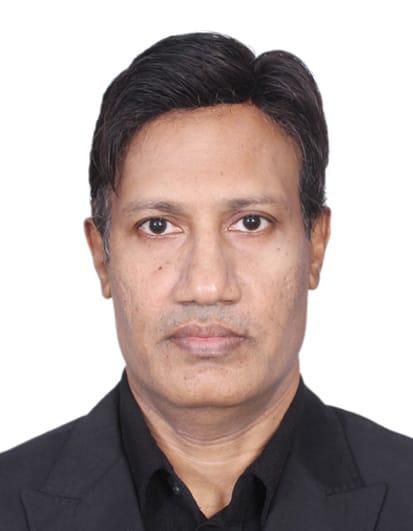
By Junaid Qaiser
After months filled with dangerous escalations, military posturing, and worries about a broader regional conflict, it seems that diplomacy is finally starting to pick up steam in the Middle East. President Donald Trump’s announcement that a peace agreement between the United States and Iran has been “largely negotiated” has sparked a sense of cautious optimism throughout the region and beyond. Even more importantly, it has underscored Pakistan’s growing role as a quiet yet effective diplomatic bridge between these rival powers.
We shouldn’t underestimate the importance of this moment. The ongoing conflict had already pushed the region into economic uncertainty and strategic instability. The Strait of Hormuz — one of the world’s most vital energy corridors — became a stark reminder of just how fragile the regional security landscape had become. Any significant disruption there posed a threat to global oil markets, trade routes, and economies that were already struggling. In this context, even small steps toward diplomacy carry immense geopolitical significance.
President Trump framed the emerging agreement as evidence that direct engagement, when paired with pressure, can yield results where prolonged confrontations fall short. In his remarks, Trump noted that the “final aspects and details” of the agreement are still being discussed and will be revealed soon. Reports suggest that the framework might involve reopening the Strait of Hormuz, extending the ceasefire, offering limited sanctions relief, and further negotiations regarding Iran’s nuclear activities.
For weeks, Islamabad has been actively involved in mediation efforts aimed at reducing tensions and maintaining communication between all sides. Pakistan’s unique position — maintaining working relations with Iran, the Gulf states, China, and the United States simultaneously — has given it strategic relevance at a moment when trusted intermediaries are scarce.
At the center of these efforts stands Chief of Defence Forces and Chief of Army Staff Field Marshal Asim Munir. According to Pakistan’s military media wing, the ISPR, Field Marshal Munir conducted intensive negotiations with Iranian leadership that resulted in “encouraging progress towards a final understanding.” His recent visit to Tehran reportedly included high-level meetings with Iranian President Masoud Pezeshkian, senior political leaders, and foreign policy officials focused on advancing the consultative process and preserving regional stability.
Pakistan’s diplomatic role reflects a broader strategic calculation. Islamabad understands that another prolonged Middle East conflict would have severe consequences not only for Gulf states and Iran, but also for Pakistan itself. Rising oil prices, economic shocks, regional polarization, and instability in maritime trade routes would directly impact Pakistan’s economy and national security interests.
This is why Pakistan’s approach has centered on de-escalation rather than alignment. Instead of public grandstanding, Islamabad has relied on discreet diplomacy, backchannel communication, and continuous engagement with all stakeholders. That strategy now appears to be yielding results.
Field Marshal Asim Munir’s diplomacy has also strengthened Pakistan’s international image at a time when the country has been seeking to reposition itself as a constructive regional actor. In recent years, Pakistan’s global narrative was often dominated by domestic political turbulence and economic pressures. However, the current mediation effort presents a different image — one of a country attempting to contribute to regional stability rather than merely reacting to crises.
Equally notable is the wider regional support behind the negotiations. Saudi Arabia, the United Arab Emirates, Qatar, Turkey, Egypt, Jordan, and Bahrain have all reportedly supported diplomatic efforts aimed at preventing further escalation. This broader regional consensus reflects growing recognition that sustained instability serves nobody’s long-term interests.
The possible reopening of the Strait of Hormuz would itself represent a major breakthrough. Global markets remain highly sensitive to disruptions in Gulf shipping lanes, and any durable arrangement restoring maritime security would immediately reduce economic uncertainty. For energy-importing countries like Pakistan, stability in the Gulf translates directly into economic breathing space.
For President Trump, a finalized agreement would reinforce his long-standing argument that aggressive diplomacy and unconventional negotiation tactics can produce breakthroughs. For Iran, the deal could create opportunities for economic relief and regional normalization. For Gulf countries, it offers the possibility of reduced tensions and greater stability. And for Pakistan, successful mediation could significantly enhance its diplomatic credibility on the global stage.
Perhaps most importantly, this emerging agreement demonstrates that diplomacy still matters in a deeply polarized international environment. Military pressure may shape negotiations, but lasting stability almost always requires communication, compromise, and political realism.
Pakistan’s mediation efforts — particularly the role played by Field Marshal Asim Munir — have shown that middle powers can still influence major geopolitical outcomes when they act with strategic clarity and diplomatic balance.
The agreement may not yet be finalized, and many obstacles remain ahead. But for the first time in months, there is a realistic possibility that the region could move away from confrontation and toward cautious stabilization.
