
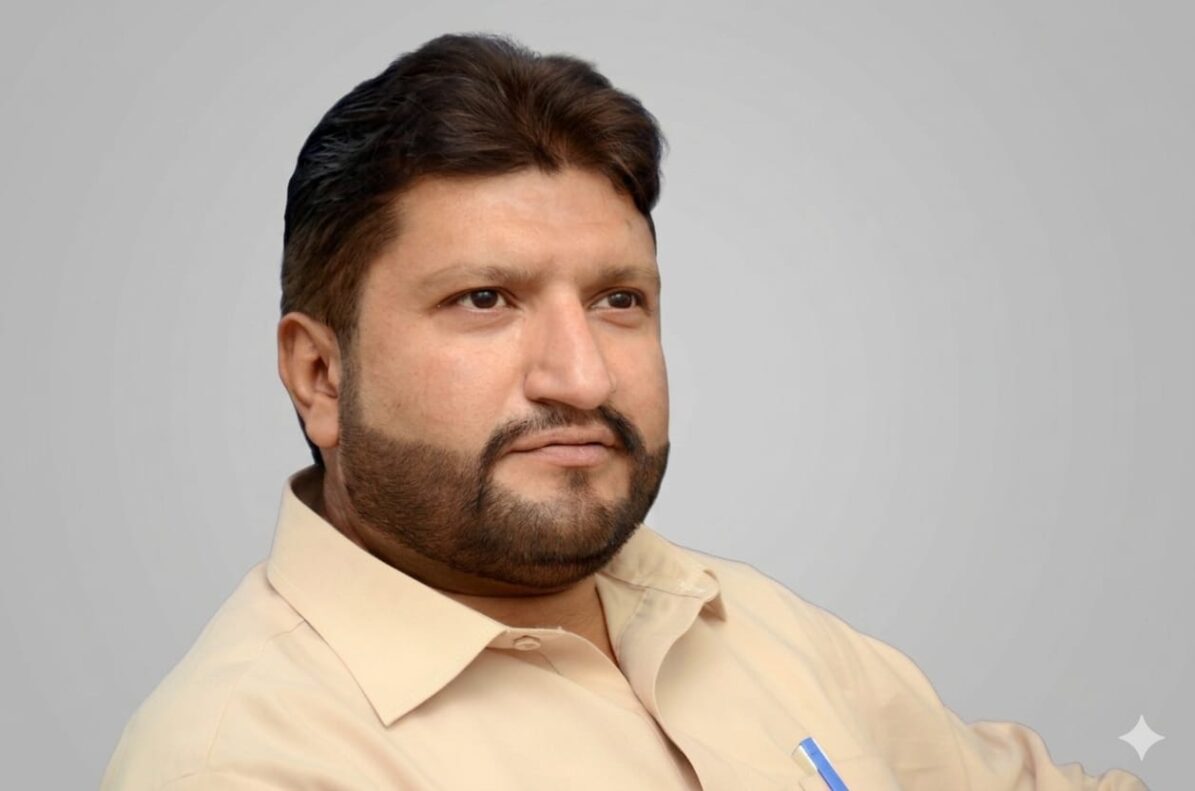
Amjad Hadi Yousafzai
Lahore has never been just a city; it has always been the beating center of Pakistan’s political, social, and intellectual discourse. When I traveled to Lahore to attend the national consultation on reforms in Christian family laws, I initially thought it would be another routine conference — a few speeches, some photographs, and then everyone returning quietly to their respective cities. However, the two-day consultation made one thing clear: the struggle for minority rights in Pakistan is far from over; in many ways, the real battle has only just begun.
Upon arriving in Lahore, one could immediately sense an atmosphere of intellectual engagement and urgency. Delegates from across the country — politicians, lawyers, religious scholars, human rights activists, women leaders, and young participants — gathered under one roof. A single question seemed to echo through the hall:
“Why have reforms to Christian family laws been delayed for so long?”
This was not merely a legal question; it was a question of human dignity, equality, and justice.
The consultation focused extensively on proposed amendments to the Christian Marriage Act of 1872 and the Christian Divorce Act of 1869. Several speakers emphasized that these colonial-era laws no longer reflect contemporary social realities. They argued that urgent reforms are essential to protect the rights of women, children, and families within the Christian community.
The atmosphere of the conference was more intellectual than ceremonial. The question-and-answer sessions were especially engaging. Young participants asked bold and direct questions, some of which created moments of complete silence in the hall.
One young delegate asked:
“If Parliament cannot even agree on the basic family rights of minorities, then where is the equality promised in the Constitution?”
Another participant questioned:
“Is religious freedom limited only to worship, or does the state also bear responsibility in matters such as marriage and family life?”
These were not emotional outbursts but reflections of constitutional awareness and social consciousness. Yet a bitter reality also emerged during these discussions: whenever a question became too critical or too direct, there were visible attempts to interrupt or soften the discussion. At times, it seemed that certain circles were still uncomfortable with difficult questions. However, dialogue becomes meaningful only when criticism and disagreement are genuinely tolerated.
Among all the discussions, the most disappointing and troubling aspect was the absence of key constitutional and legal institutions from Khyber Pakhtunkhwa.
This was not merely an administrative oversight; it reflected a serious political and institutional failure.
After the 18th Constitutional Amendment, provincial autonomy increased significantly, along with the responsibilities of provincial commissions and institutions. In such a context, the absence of representatives from the Khyber Pakhtunkhwa Commission on the Status of Women and the provincial representatives of the National Commission for Human Rights raised serious concerns.
Are minority issues not considered important in Khyber Pakhtunkhwa?
Are the family and social rights of women and religious minorities not among the priorities of provincial institutions?
And if such institutions remain absent from important national consultations, then what practical purpose do they serve?
These questions were strongly raised during the conference. Haroon Sarab Dayal, focal person of the National Lobbying Delegation for Minority Rights in Khyber Pakhtunkhwa, openly criticized this absence. His remarks carried more pain than anger. He rightly pointed out that institutions cannot understand ground realities while remaining confined to offices and files.
Indeed, minority issues cannot be understood through paperwork alone. They require participation in spaces where affected communities speak directly about their lived experiences.
It was equally unfortunate that certain institutions working on women’s rights did not even consider representation necessary, despite the fact that the consultation heavily focused on women’s legal, social, and family protections.
On the other hand, those individuals and institutions who participated deserve appreciation.
Members of the Khyber Pakhtunkhwa Assembly, Askar Parvez and Wazirzada, conveyed a positive message through their presence. Bishop Humphrey Sarfraz Peter spoke thoughtfully about religious harmony and social inclusion. Sindh Assembly Deputy Speaker Naveed Anthony Suthra delivered one of the most memorable remarks of the conference when he asked:
“If laws can be made for forests, why can’t laws be made for human beings?”
That single sentence seemed to summarize the entire consultation.
Dr. Shoaib Suddle, Noreen Nain Bano Leghari, Farah Zia, and several other speakers also emphasized that this issue is not merely religious but fundamentally linked to human rights. Their speeches reflected both legal reasoning and human compassion.
During the final day, as panel discussions focused on the role of media, civil society, and academia in advancing minority family law reforms, I repeatedly felt that Pakistan’s struggle for minority rights remains a long and difficult journey. Legal reform does not occur in parliament alone; it also requires transformation in society’s mindset.
As I traveled back from Lahore, I kept thinking about the empty chairs reserved for representatives of certain institutions from Khyber Pakhtunkhwa. Those empty chairs were not just vacant seats — they symbolized a silent question:
“Do we truly want an equal Pakistan?”
If the answer is yes, then institutions must move beyond silence and symbolic statements. Minority issues cannot be resolved through rhetoric alone. They demand active participation, political commitment, and institutional seriousness.
This consultation in Lahore offered both hope and disappointment. Hope came from those who spoke openly, raised difficult questions, and demanded reform.
Disappointment came from those institutions that still fail to realize that silence, too, can become a form of complicity in injustice.
