
PROVINCE REPORT
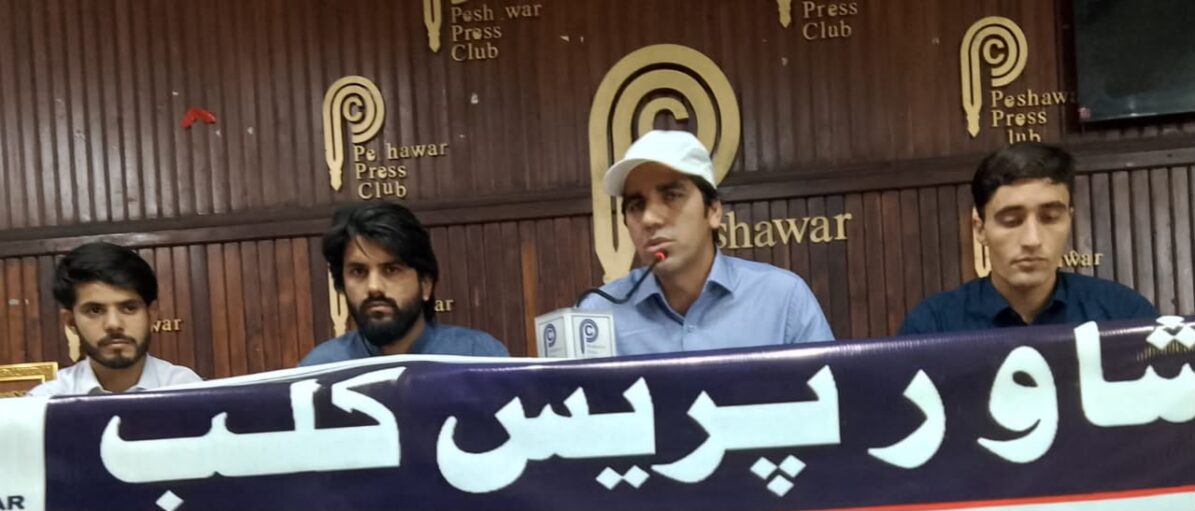
PESHAWAR: Youth representatives from various districts of Khyber Pakhtunkhwa, including Khyber, Swat, Landi Kotal, Chitral, Kohistan, and Shangla, held a press conference at the Peshawar Press Club on Wednesday under the leadership of Engineer Muhammad Khaliq, Javed Hussain Afridi, and Fazal Amin Afridi.
Addressing the media, they urged the Khyber Pakhtunkhwa government to immediately withdraw what they termed an unjust recruitment policy and halt appointments being made under the current ESTA Code.
They argued that the policy undermines merit and disadvantages candidates who have worked hard for years to qualify in competitive examinations.
The speakers stated that while academic marks can be obtained by many students, the true measure of merit is reflected in performance in the Educational Testing and Evaluation Agency (ETEA) examinations. However, under the new recruitment policy, ETEA test scores have been reduced to only 20 percent weightage, which they described as a grave injustice to deserving candidates.
Engineer Muhammad Khaliq said that diminishing the importance of higher education and reducing the significance of recruitment tests is unfair to candidates who have successfully passed competitive examinations through hard work and dedication.
He maintained that limiting test weightage to 20 percent is contrary to the fundamental principles of merit.
He called on the provincial government to adopt a recruitment mechanism similar to those followed by the Federal Public Service Commission (FPSC) and the Punjab Public Service Commission (PPSC), ensuring that competent and qualified candidates receive their due rights.
On behalf of youth from different parts of Khyber Pakhtunkhwa, Engineer Muhammad Khaliq appealed to Chief Minister Suhail Afridi, Speaker of the Khyber Pakhtunkhwa Assembly Babar Saleem Swati, and Chief Secretary Shahab Ali Shah to review the ESTA Code and introduce a transparent recruitment system based on merit.
The youth representatives proposed that recruitment criteria should allocate 70 percent weightage to the entry test, 15 percent to academic records, 10 percent to higher education qualifications, and 5 percent to interviews.
They argued that interview marks should remain limited because favoritism and recommendations often influence interview outcomes, resulting in the denial of opportunities to deserving and merit-based candidates.
They expressed hope that Chief Minister Suhail Afridi, who has consistently emphasized reforms in the education sector, would take notice of the issue and introduce reforms that protect merit and prevent favoritism in government recruitment.
The speakers further stated that a transparent and merit-based recruitment system would ensure the induction of capable, competent, and dedicated individuals into public institutions, ultimately contributing to the development and progress of both the province and the country.
