
Amjad Hadi Yousafzai
Peshawar: The absence of key constitutional and legal bodies from Khyber Pakhtunkhwa at a national consultative meeting on minority rights held in Lahore has raised serious questions about the performance of the provincial government and relevant commissions.
In the context of provincial autonomy following the 18th Constitutional Amendment, the responsibilities of such institutions have increased further. However, their non-participation has cast doubt on the government’s seriousness regarding the protection of minority rights.
Haroon Sarab Dayal, focal person of the National Lobbying Delegation for Minority Rights Khyber Pakhtunkhwa and a well-known minority rights activist, expressed strong concerns over the absence of representatives from the Khyber Pakhtunkhwa Commission on the Status of Women and the National Commission for Human Rights in the meeting.
He said that if these institutions do not participate in important national consultations, how can they gain complete and accurate awareness of the issues faced by minorities in the province, particularly regarding the fundamental rights of women, children, and religious minorities.
Haroon Sarab Dayal noted that the National Commission on the Status of Women did not send an official representative to the meeting, even though a female Christian delegate was present. According to him, this clearly indicates that the concerned institutions are not fulfilling their constitutional and legal responsibilities with the required seriousness.
He questioned the purpose of establishing such commissions and committees if they do not participate in important national consultative processes. He stressed that effective and lasting solutions to minority issues require active participation from all relevant national and provincial institutions.
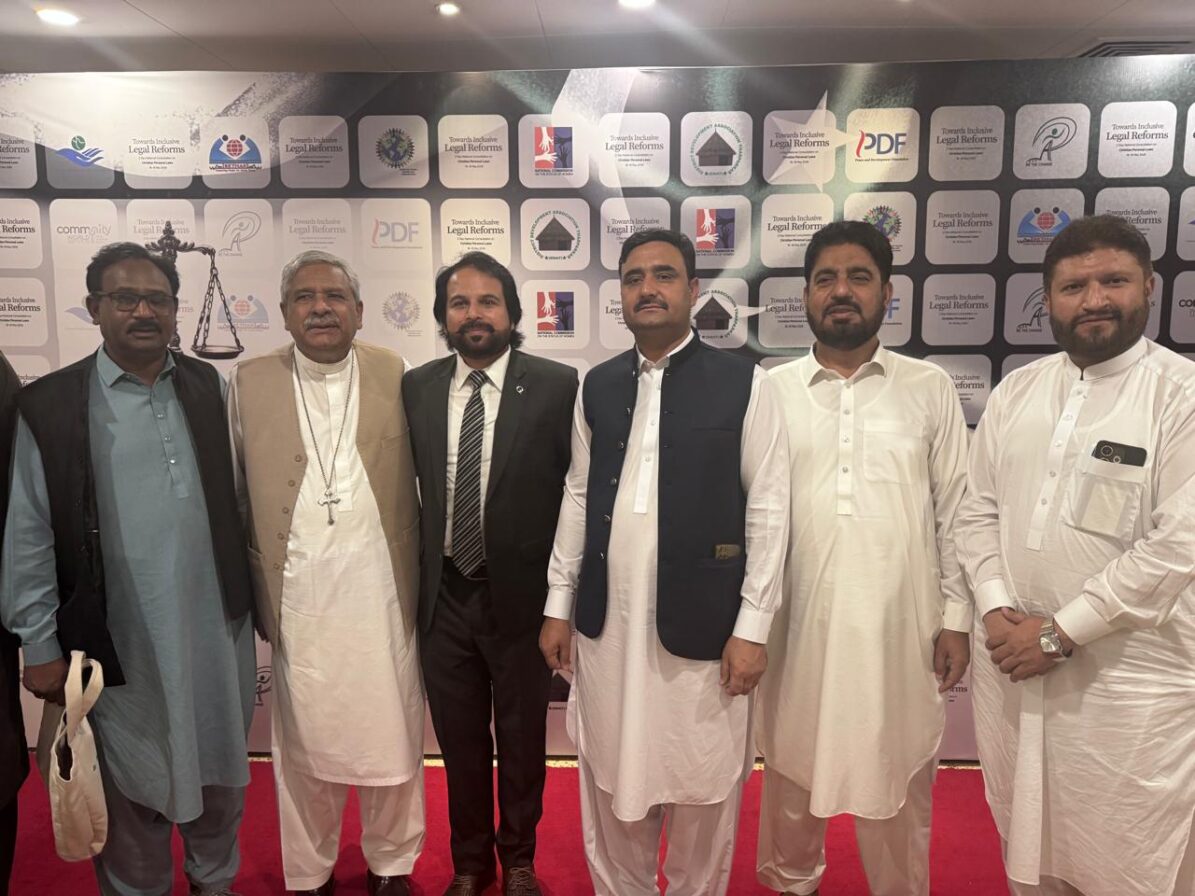
The meeting was attended by Bishop Humphrey Sarfaraz Peter, members of the Khyber Pakhtunkhwa Assembly Askar Parvez and Wazir Zada (Focal Person to the Chief Minister of Khyber Pakhtunkhwa on Minority Affairs), representing the province.
The leaders reaffirmed that the provincial government remains committed to prioritizing the protection of the constitutional, religious, and civil rights of minorities. They assured that the Khyber Pakhtunkhwa government would implement effective and practical reforms in Christian family laws in line with religious teachings and contemporary needs, along with the protection of places of worship, religious freedom, equal civil rights, and the promotion of interfaith harmony.
Participants welcomed the assurances given by Khyber Pakhtunkhwa representatives and expressed hope that the provincial government would take concrete steps to provide a safe, empowered, and dignified environment for minority communities.
However, participants clearly felt that the absence of representatives from the Khyber Pakhtunkhwa Commission on the Status of Women and the National Commission for Human Rights made the meeting incomplete.
Minority rights activists and civil society representatives have demanded that in future national consultations, the effective participation of all relevant institutions be ensured so that comprehensive, effective, and workable solutions to the issues faced by minorities can be achieved.
