
By Shamsul Haq
As the United States marks the 250th anniversary of its independence, celebrations are being held not only across America but also in various parts of the world. This year’s commemorations are being observed under President Donald Trump’s slogan, “A New Era of American Greatness,” reflecting Washington’s resolve to further strengthen its political, economic and military leadership on the global stage.
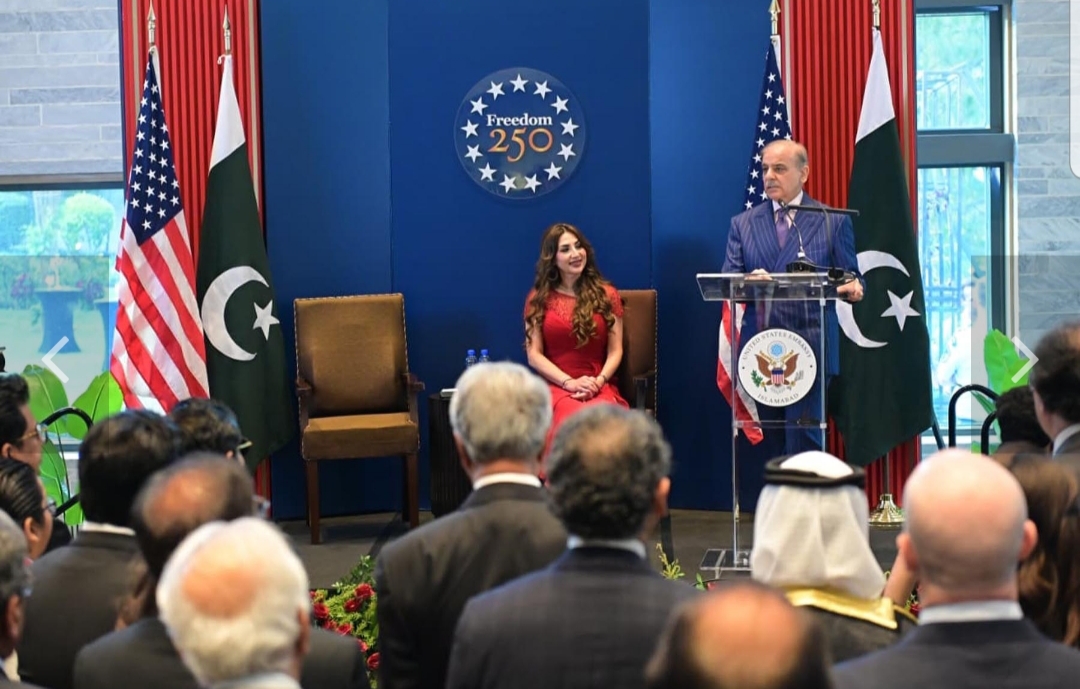
In Pakistan, the occasion was marked by a special event hosted by the US Embassy in Islamabad, led by Chargé d’Affaires Natalie A Baker.
The ceremony highlighted the significance of Pakistan-US partnership, mutual cooperation and bilateral engagement. It was attended by Pakistan’s senior political and military leadership, business figures, members of the diplomatic community, representatives of civil society and distinguished guests from all four provinces.
The participation of Prime Minister Shehbaz Sharif underscored the importance Pakistan continues to attach to its relationship with the United States as a key pillar of its foreign policy. It is noteworthy that despite the absence of a permanent US ambassador in Islamabad, the presence of Pakistan’s top leadership at the event reflected the continued diplomatic engagement and cooperation between the two countries.
Pakistan-US relations span nearly eight decades. Shortly after Pakistan’s creation in 1947, the United States was among the first countries to establish diplomatic relations with the newly independent state. During the Cold War, bilateral ties deepened considerably as Pakistan joined US-backed defence alliances, including SEATO and CENTO. In return, Washington provided economic and military assistance, while Pakistan emerged as an important ally within the Western bloc.
The relationship, however, has not always been smooth. American policies during the 1965 and 1971 Indo-Pak wars drew criticism in Pakistan, where many viewed Washington’s role with dissatisfaction. Relations also cooled during the 1990s when US sanctions linked to Pakistan’s nuclear programme created significant strains. Nevertheless, diplomatic contacts and cooperation never ceased entirely.
Following the events of September 11, 2001, Pakistan once again became a key US partner in the global war on terrorism. This cooperation resulted in billions of dollars in assistance to Pakistan. At the same time, issues such as drone strikes, security concerns and a persistent trust deficit frequently tested the relationship.
Over the past several years, Pakistan-US ties have entered a new phase. The relationship is no longer centred solely on security and defence cooperation. Trade, investment, climate change, energy, education, healthcare and technology have increasingly become important areas of engagement. The United States remains one of Pakistan’s largest export destinations, while thousands of Pakistani students continue to pursue higher education at American universities.
Rapid changes in global politics, China’s growing influence, South Asia’s strategic importance and the region’s evolving security environment are factors that compel both Pakistan and the United States to maintain dialogue and cooperation. While differences persist on certain issues, the reality is that Pakistan-US relations are not based merely on short-term interests but rest on a broader strategic foundation.
The diplomatic event held in Islamabad to commemorate the 250th anniversary of American independence serves as a reminder that despite experiencing numerous ups and downs, Pakistan-US relations continue to hold significant importance. In an increasingly complex international environment, it is essential for both countries to expand their engagement on the basis of mutual respect, trust and shared interests. Equally important is the need to remain mindful of the aspirations, sentiments and welfare of their peoples, thereby contributing to regional stability, prosperity and sustainable development.
The writer is a retired director of the Khyber Pakhtunkhwa Information and Public Relations Department.
infomardan8@gmail.com
