
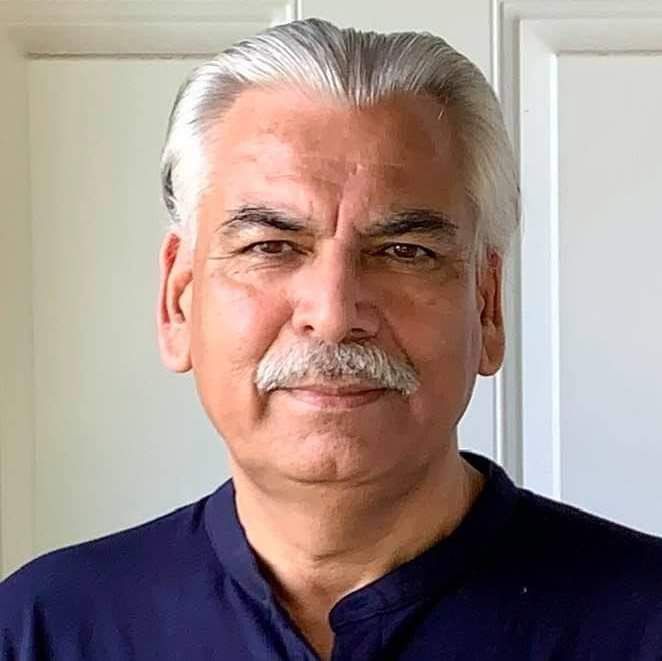
Barrister Usman Ali, Ph.D.
Pakistan has not faced terrorism only on battlefields, in border regions, or at security checkpoints. It has seen terrorism enter its markets, places of worship, schools, neighbourhoods, and the homes of ordinary citizens. Over the past several decades, thousands of precious lives have been lost, the economy has suffered deeply, social peace has been shaken, and both state institutions and ordinary citizens have made immense sacrifices.
But today, Pakistan faces a new front. On this front, the attacker does not always carry a gun; he carries a mobile phone. The weapon is not explosives, but a false narrative. The battlefield is not a fixed location, but every screen within public reach. This threat may appear silent, invisible, and rooted in modern technology, but its consequences are no less serious than those of any traditional form of violence. This is the threat of digital terrorism.
Digital terrorism refers to organised campaigns that use social media platforms such as YouTube, TikTok, Facebook, X, WhatsApp, and other online spaces to spread false information, hateful narratives, character assassination, harassment, incitement, and propaganda against individuals or institutions. Today, almost everyone has a mobile phone. Anyone can record a video, publish a post, comment on an issue, or circulate a claim. Used responsibly, this access can promote awareness, reform, and constructive dialogue. Used recklessly or maliciously, it can weaken the very foundations of society.
Unfortunately, Pakistan has witnessed a sharp rise in this toxic trend in recent years. Certain elements, both inside the country and abroad, run coordinated campaigns against the state, national institutions, political opponents, journalists, religious scholars, television anchors, public figures, and people serving in positions of responsibility. These campaigns rarely rely on civil disagreement. Instead, they use abuse, false accusations, fabricated stories, fake videos, clips stripped of context, and insulting content to damage people’s dignity, reputation, and credibility.
This is not merely bad manners or unethical behaviour. In many cases, it fuels social unrest, extremism, and even direct violence. When a person is repeatedly targeted with hateful propaganda and branded a traitor, an unbeliever, an agent, or an enemy, vulnerable or extremist individuals may begin to treat those lies as truth. As a result, that person’s life, family, honour, and social standing can be placed in danger. Pakistan has already seen cases where false allegations, religious or political hatred, and online campaigns have put lives at serious risk, led to deaths, and encouraged violence against individuals.
The most troubling aspect is the confidence with which many of these actors operate. Some use their real names, but many hide behind fake accounts and false identities. They launch campaigns from within Pakistan and from abroad, turn outrage into a business, and profit from hatred through views, followers, and online influence. On platforms such as YouTube and TikTok, inflammatory content often spreads faster than responsible reporting or reasoned debate. A segment of society that is emotional, poorly informed, or easily manipulated then likes, shares, and amplifies such material. In this way, an entire marketplace of lies takes shape. This trend is no longer limited to small circles; it is now influencing social behaviour, political discourse, and public opinion on a large scale.
Governments have introduced laws against cybercrime, harassment, and hateful content, but the real challenge lies in enforcement. Laws that exist only on paper do not protect citizens. If offenders continue to act freely, fear of the law disappears. This is why those involved in online defamation, disinformation, and hate campaigns often believe they are untouchable. They know that cases may be weak, investigations may be slow, evidence collection may be flawed, or matters may be buried under political pressure.
One point must be absolutely clear: action against digital terrorism does not mean suppressing freedom of expression. Criticism, disagreement, journalism, political debate, and questioning government policy are the rights of every citizen. In a democratic society, state institutions, governments, political parties, and influential individuals must be open to scrutiny. But there is a clear difference between legitimate criticism and organised campaigns built on lies, threats, harassment, character assassination, and incitement to violence. Criticism is not a crime. But a campaign that endangers someone’s life, relies on fabricated material, spreads hatred, or encourages violence cannot be accepted in any civilised society. Such conduct is not only morally condemnable; it must also be treated as a serious offence under the law.
Many developed countries have strict laws against hate speech, online threats, harassment, disinformation, and incitement to violence. Such offences are not treated as freedom of expression, but as threats to public safety, social peace, and national security. Pakistan, too, needs a serious, balanced, and effective approach , one that does not silence legitimate voices, but also does not give free rein to those who weaponise digital platforms.
The first requirement is transparent and impartial enforcement of cybercrime laws. No law should become a tool for political victimisation. It should be applied firmly and fairly against anyone who promotes lies, harassment, hatred, or violence. Second, Pakistan must strengthen coordination with social media companies so that fake accounts, organised hate networks, and content inciting violence can be addressed quickly. Third, investigative agencies must be equipped with modern digital forensic tools, training, and resources so that online crimes can be properly investigated and evidence can stand in court. The judiciary also has a vital role to play by avoiding unnecessary delays and ensuring timely decisions in accordance with the law.
At the same time, digital literacy must become part of both education and public awareness. People need to understand that every video, post, screenshot, or viral claim is not necessarily true. The ability to identify fake content, verify information through credible sources, share responsibly, and disagree respectfully must be taught from an early age. If society itself does not become more aware, the law alone cannot solve this crisis.
Journalists, religious scholars, political leaders, teachers, and civil society also carry a major responsibility. They must help build a culture in which disagreement is not treated as enmity, criticism is not reduced to abuse, and political or religious affiliation is never used as an excuse to degrade another human being. A healthy society answers arguments with arguments, not character assassination; it expresses disagreement with dignity, not hatred.
Pakistan has already paid a heavy price for traditional terrorism. If digital terrorism is dismissed as a minor issue or allowed to grow unchecked, its consequences could be long-lasting and deeply destructive. Armed terrorism may, at some point, be contained through security operations, strategy, and national unity. Digital terrorism, however, can reach every home, every mobile phone, and every mind. It is not restricted by borders, and it does not require a conventional battlefield.
The time has come for the state, society, media, judiciary, educational institutions, and technology platforms to confront this challenge together. To call lies, hatred, and character assassination “freedom of expression” is a grave mistake. Freedom of expression strengthens society; digital terrorism divides it.
Pakistan must now decide whether social media will become a source of awareness, knowledge, dialogue, and national harmony, or whether it will be surrendered to hatred, disorder, and poisoned public discourse. The country’s social peace, national unity, and intellectual future will depend on this choice, because the lie that spreads from one screen today can engulf an entire society tomorrow.
