
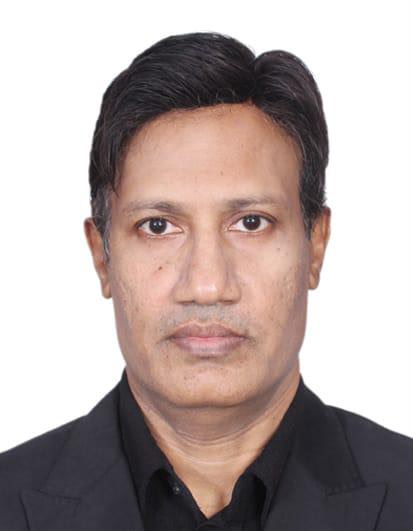
By Junaid Qaiser
At a time when the Middle East is struggling to contain overlapping conflicts and political uncertainty, diplomacy and trusted partnerships have become more important than ever. Against this fragile backdrop, the recent visit of Lebanese Army Commander General Rodolphe Haykal to Pakistan reflects not only the deepening ties between Pakistan and Lebanon but also Pakistan’s growing relevance in regional diplomacy and peacebuilding.
General Haykal’s visit to Islamabad at the invitation of Field Marshal Syed Asim Munir comes at a particularly sensitive moment for Lebanon. The country continues to grapple with enormous economic hardship, political fragility, and mounting security concerns fueled by broader regional tensions. Recent violence and ceasefire violations have once again reminded the world that Lebanon remains deeply vulnerable to the ripple effects of instability in the Middle East.
In such difficult circumstances, partnerships built on trust matter greatly. Pakistan’s engagement with Lebanon increasingly appears to be rooted in exactly that principle.
For decades, Pakistan and Lebanon have maintained friendly and respectful relations. While these ties may not always dominate headlines, they have steadily developed through diplomatic understanding, defense cooperation, and shared support on international issues. Since the establishment of formal diplomatic relations in the 1950s, both nations have demonstrated a willingness to stand by each other during challenging periods.
What makes the current moment particularly important is the evolving nature of this relationship. Pakistan is no longer engaging with Lebanon solely through traditional diplomacy. Instead, Islamabad is increasingly positioning itself as a meaningful partner in Lebanon’s pursuit of security and long-term stability.
Military cooperation remains one of the strongest pillars of this relationship. Pakistan has a longstanding record of training Lebanese military officers, helping strengthen institutional professionalism within Lebanon’s armed forces. In a region where security institutions often face enormous pressure, such cooperation can play a meaningful role in strengthening resilience and national preparedness.
General Haykal’s visit highlights this growing defense partnership. Discussions reportedly focus on military cooperation, training opportunities, and broader institutional support for Lebanon’s armed forces, which continue to face serious resource limitations amid economic challenges at home. For Lebanon, strengthening military capabilities is not only about defense; it is also about preserving internal stability and protecting state institutions during a period of uncertainty.
For Pakistan, these engagements represent something broader: a more active and constructive role in regional affairs.
In recent years, Pakistan has increasingly sought to position itself as a bridge-builder in international diplomacy. Rather than pursuing confrontation, Islamabad has emphasized dialogue, mediation, and de-escalation—particularly in times of regional crisis. Amid tensions involving major regional actors and their wider consequences for Lebanon, Pakistan’s diplomatic engagement signals an effort to encourage stability rather than deepen divisions.
This matters because Lebanon often finds itself caught in the crosscurrents of larger geopolitical struggles. Regional confrontations rarely stay confined to borders, and smaller nations frequently pay the heaviest price. Any serious effort to reduce tensions in the Middle East must therefore include Lebanon’s stability as part of the conversation rather than treating it as an afterthought.
Pakistan appears increasingly aware of this reality.
Islamabad’s diplomatic outreach and military engagement suggest a broader understanding that peace in the Middle East requires patient diplomacy, credible partnerships, and practical cooperation. In that sense, Pakistan’s relationship with Lebanon is becoming an example of how middle powers can contribute positively to regional stability without relying on coercion or geopolitical competition.
Field Marshal Syed Asim Munir’s leadership has also played an important role in shaping Pakistan’s strategic posture. Under his stewardship, Pakistan’s military diplomacy appears more outward-looking, focused not only on traditional defense priorities but also on building partnerships that strengthen regional peace and security. The invitation extended to General Haykal underscores growing confidence in military-to-military relations between the two countries.
Pakistan and Lebanon have significant untapped potential beyond military engagement. Economic cooperation, information technology, education, energy, tourism, and skilled workforce exchanges all offer opportunities for stronger collaboration. At a time when both countries seek economic resilience in difficult environments, expanding bilateral engagement could bring meaningful benefits.
Equally important is the spirit in which these relations continue to develop. Unlike relationships often shaped by dependency or political pressure, Pakistan and Lebanon’s engagement appears grounded in mutual respect and shared interests. This gives the partnership a stronger foundation and allows both countries to approach cooperation as equals.
The timing of General Haykal’s visit is therefore deeply significant. As Lebanon navigates serious internal and external pressures, Pakistan’s willingness to strengthen ties sends a message of solidarity and confidence. It reflects Islamabad’s belief that regional peace requires sustained engagement and practical cooperation rather than short-term political calculations.
In many ways, Pakistan’s growing role in Lebanon’s pursuit of stability also reflects a larger shift in Pakistan’s foreign policy outlook. Islamabad increasingly seeks to be seen not merely as a regional actor defined by crises, but as a country capable of contributing meaningfully to peacebuilding efforts beyond its immediate borders.
For Lebanon, Pakistan represents a dependable partner at a time when reliable friendships matter deeply. For Pakistan, Lebanon offers an opportunity to strengthen its diplomatic footprint in a region whose stability affects global peace and economic security.
