
By Junaid Qaiser
The 250th anniversary celebration of the United States in Islamabad was more than just about honring American independence; it symbolized a partnership that has stood the test of time through various governments, shifting global dynamics, regional tensions, and moments of both unity and discord. Most importantly, it served as a moment to assess the current state of Pakistan-US relations and ponder their future trajectory.
The event brought together diplomats, government officials, and members of the international community, but it was the speeches of Prime Minister Shehbaz Sharif and US Chargé d’Affaires Natalie Baker that captured the significance of the moment. Both leaders spoke not only about history but also about the future, presenting a vision of a partnership that is evolving beyond traditional security concerns into a broader strategic relationship.
PM Shehbaz described U.S and Pakistan as partners linked by nearly eight decades of cooperation. His remarks carried a sense of appreciation for a relationship that has influenced Pakistan’s development in many ways. From educational exchanges and agricultural modernization to infrastructure projects and economic cooperation, the prime minister highlighted how American support has contributed to Pakistan’s progress over the years.
What stood out most in his speech was the emphasis on continuity. In an era where international alliances often shift rapidly, Shehbaz Sharif reminded the audience that both nations have repeatedly found ways to work together during some of the most consequential periods in modern history. Whether during the Cold War, the fight against terrorism, or efforts to promote regional stability, the two countries have maintained channels of engagement that continue to shape their bilateral relationship.
The PM also paid tribute to the Pakistani diaspora in the United States. Nearly one million Pakistani-Americans, he noted, serve as a bridge between the two nations. Their contributions in medicine, business, education, science, and public service have strengthened ties at a level that goes beyond government-to-government relations. These personal and professional connections often prove to be the strongest foundation of any enduring partnership.
Equally significant was Shehbaz Sharif’s focus on diplomacy and peace. He praised President Donald Trump’s role in helping de-escalate tensions between Pakistan and India during the crisis of 2025, describing the intervention as an important contribution to regional stability. Whether viewed through a diplomatic or strategic lens, the message was clear: peace remains essential for the prosperity of South Asia, and international engagement can play a constructive role in preventing conflict.
He also highlighted Pakistan’s role in facilitating dialogue between the U.S and Iran. His remarks reflected Islamabad’s desire to position itself as a responsible and constructive actor on the international stage. At a time when global politics is increasingly polarized, Pakistan’s efforts to encourage dialogue rather than confrontation deserve recognition.
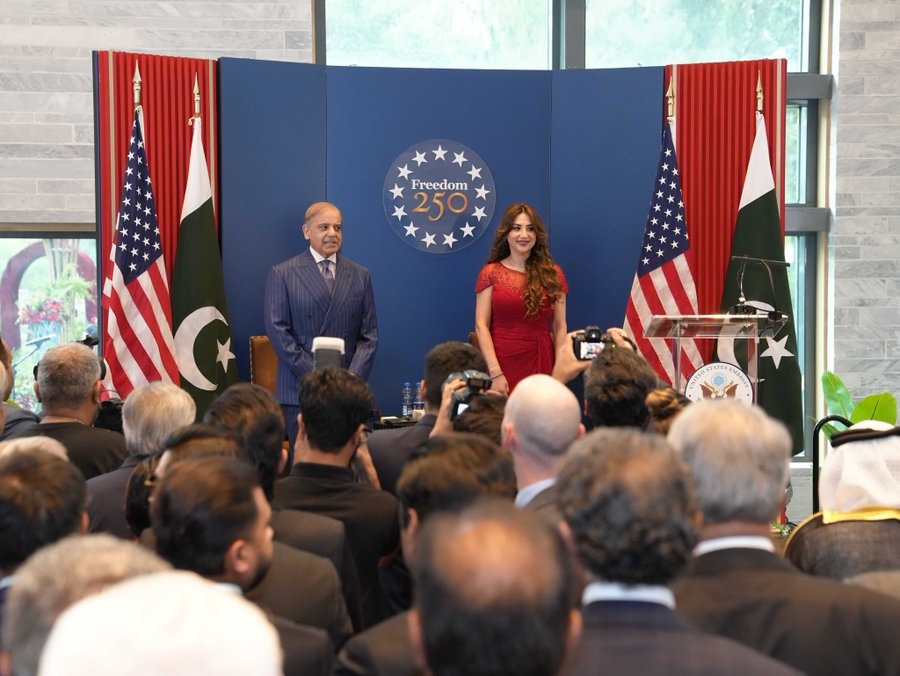
Natalie Baker’s speech reflected a remarkable level of optimism about the future of Pakistan-US relations. She described the relationship as one based not merely on transactions or short-term interests, but on mutual respect, shared objectives, and strategic cooperation. Such language signals a shift from the narrow frameworks that have often defined the relationship in previous decades.
Baker credited President Trump’s leadership with bringing renewed energy to US engagement with Pakistan. More importantly, she emphasized the personal diplomacy that has characterized interactions between the leadership of both countries. According to her, the relationship has benefited from direct communication, trust, and a willingness to engage on issues of mutual concern.
Her recognition of Pakistan’s role in facilitating high-level engagement between Washington and Tehran was particularly striking. Baker noted that Pakistan’s unique position—maintaining constructive relations with both countries—enabled it to serve as a valuable intermediary. In an increasingly fragmented international environment, such diplomatic contributions enhance Pakistan’s relevance on the global stage.
Beyond politics and diplomacy, Baker’s remarks revealed an appreciation for Pakistan itself. Her references to Lahore’s Basant festival, her travels across the country, and her praise for Pakistani hospitality added a human dimension to the discussion.
Another important theme in her speech was economic cooperation. She highlighted ongoing efforts to expand trade, investment, and commercial ties, emphasizing that a prosperous Pakistan serves the interests of both countries. This perspective reflects a growing recognition that economic development and stability are inseparable from long-term security.
The most heartening takeaway from the event was the shared vision expressed by Shehbaz Sharif and Natalie Baker. They both conveyed a powerful message: there’s much to be gained for both Pakistan and the United States through stronger cooperation. Their speeches indicated that the relationship is moving into a new era, where economic prospects, regional diplomacy, technological partnerships, and educational initiatives could become key focus areas.
