
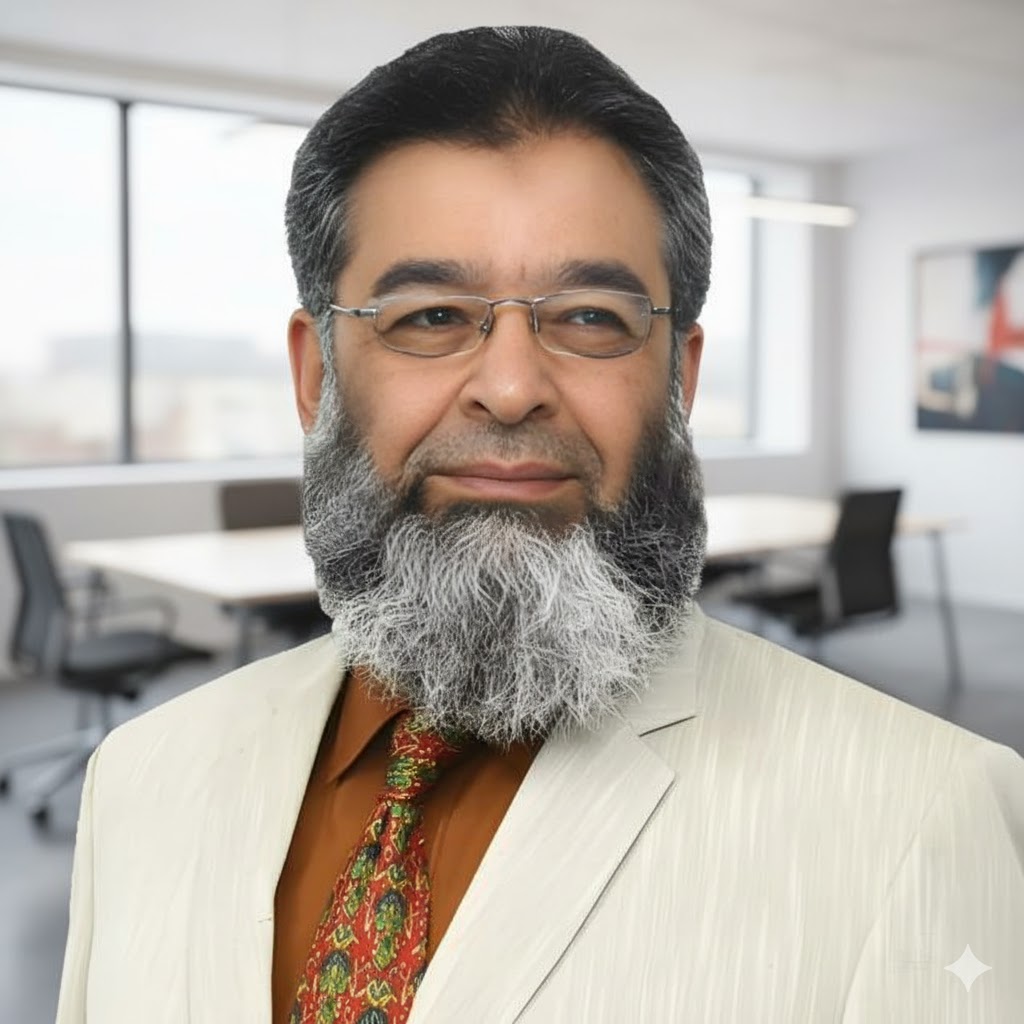
by Muhammad Mohsin Iqbal
For more than seventy long years, the people of Palestine have carried a burden that no nation should ever bear. From the narrow streets of Gaza, where families huddle amid rubble, to the hills of the West Bank, where ancient olive groves are uprooted by the day, an entire population has known the daily ache of dispossession, the sting of humiliation, and the quiet grief of watching children grow up without a true home. Mothers bury their sons under skies lit by flares; fathers search through debris for any trace of yesterday’s life. The world has witnessed these scenes—broadcast into living rooms across continents—yet its response has too often been confined to solemn statements and passing protests. Condemnations echo in grand halls, only to fade into silence when decisive action is required. Those with the power to halt the suffering appear either shackled by distant interests or lulled into indifference by the comforts of expediency. Even the stoutest champions of human rights seem, on this one matter, to have misplaced their zeal for justice.
In the midst of this moral drift, Pakistan has stood as a steadfast companion to the Palestinian cause. Since the very dawn of its own independence, the nation’s heart has beaten in rhythm with the aspirations of a people denied their freedom. This was no passing sympathy born of politics alone, but a profound human solidarity rooted in shared faith, shared history, and an instinctive rejection of oppression. Pakistani leaders, even before the formal birth of the state in 1947, raised their voices against the proposed partition of Palestine. Later, in moments of open conflict, Pakistani pilots took to the skies in 1967 and 1973, risking their lives alongside Arab brothers. The spirit of that era found its finest expression in 1974, when Pakistan hosted the Islamic summit in Lahore and helped secure international recognition for the Palestine Liberation Organization as the authentic voice of its people.
This consistency has weathered every storm. Civilian governments and military administrations alike have upheld the same principled line: unwavering support for the establishment of an independent, sovereign, and contiguous Palestinian state along the pre-1967 borders, with Al-Quds Al-Sharif— the sacred city that stirs the soul of every Muslim—as its eternal capital. Pakistan does not recognise Israel, and it maintains full diplomatic ties with Palestine, whose embassy in Islamabad stands as a quiet symbol of enduring friendship. In the chambers of the United Nations and within the councils of the Organization of Islamic Cooperation, Pakistani diplomats have spoken repeatedly and without apology. They have condemned the relentless march of illegal settlements that devour Palestinian land, the annexation policies that shrink horizons of hope, and the repeated violations of international law that mock the very idea of justice.
Yet Pakistan’s contribution has never been limited to words. When the tragedy in Gaza deepened after late 2023, the Pakistani people responded with open hearts. More than 1,600 tons of aid—food parcels, life-saving medicines, blankets to ward off the winter cold, tents for the homeless, and essential medical equipment—were carefully gathered and dispatched. These were not mere shipments; each container carried the empathy of a nation that knows the pain of hardship. Pakistani hospitals have offered treatment to injured Palestinians, while universities have welcomed young students robbed of their classrooms by conflict, granting them scholarships to build skills that may one day help reconstruct their shattered homeland. In these acts, one senses the simple human impulse: when your brother bleeds, you do not turn away.
The Palestinian question has long outgrown the boundaries of territory or politics. It has become a mirror held up to the conscience of the world, revealing uncomfortable truths about selective justice and the fragility of international law. Every fresh cycle of violence revives the same haunting images—children with haunted eyes, families torn apart, a people’s dignity trampled underfoot. Pakistan has consistently maintained that no lasting peace can flower in the Middle East while the core wounds of the Palestinians remain unhealed. In recent months, as tensions between the United States, Israel, and Iran have pushed the region toward the abyss, Pakistan has chosen the harder path of restraint. It has called for de-escalation, for open dialogue, for ceasefires that allow life to return, and for humanitarian corridors that let aid reach those in desperate need. This measured voice, free of inflammatory rhetoric, has earned quiet respect across the Muslim world, where responses to the crisis are often fractured by competing interests and internal divisions.
In an age when many nations recalibrate their principles according to economic winds or security pacts, Pakistan’s moral clarity shines with rare steadiness. Its position flows not from military might or vast wealth, but from a deep-seated belief that justice is not negotiable. The Palestinian struggle is, at its core, the story of human resilience—the refusal to let oppression define one’s identity. It is the elderly farmer who tends his remaining olive trees with trembling hands; the young student studying by candlelight in a refugee camp; the mother who sings lullabies over the sound of distant explosions. Pakistan’s support honours that resilience. It affirms that no people should be asked to normalise their own subjugation in exchange for a false promise of stability.
There are moments in the life of nations when silence becomes a form of betrayal. The Palestinian cause remains such a moment. It tests whether the world still believes in equal rights, in the sanctity of sovereignty, and in the simple human right to live with dignity. Pakistan’s enduring solidarity—diplomatic, humanitarian, and moral—serves as a reminder that true peace can only rest upon foundations of justice. Without them, every agreement is but a pause before the next storm. As the international landscape grows more polarised and law itself bends to the will of the powerful, voices guided by principle acquire a special resonance.
Pakistan does not claim to hold all the answers. It knows, as every thoughtful observer does, that diplomacy alone cannot undo decades of accumulated pain. Yet by refusing to abandon its convictions, Pakistan keeps alive the possibility of a better path—one where dialogue replaces violence, where rights are respected, and where the children of Palestine may one day walk freely in a land they can truly call their own. In standing with them across seventy difficult years, Pakistan has not merely followed a foreign policy; it has honoured the universal longing for freedom that stirs in every human heart. And in doing so, it reminds us all that moral consistency, however quiet, retains its power even in an age that too often prizes convenience above conscience.
