
Amjad Hadi Yousafzai
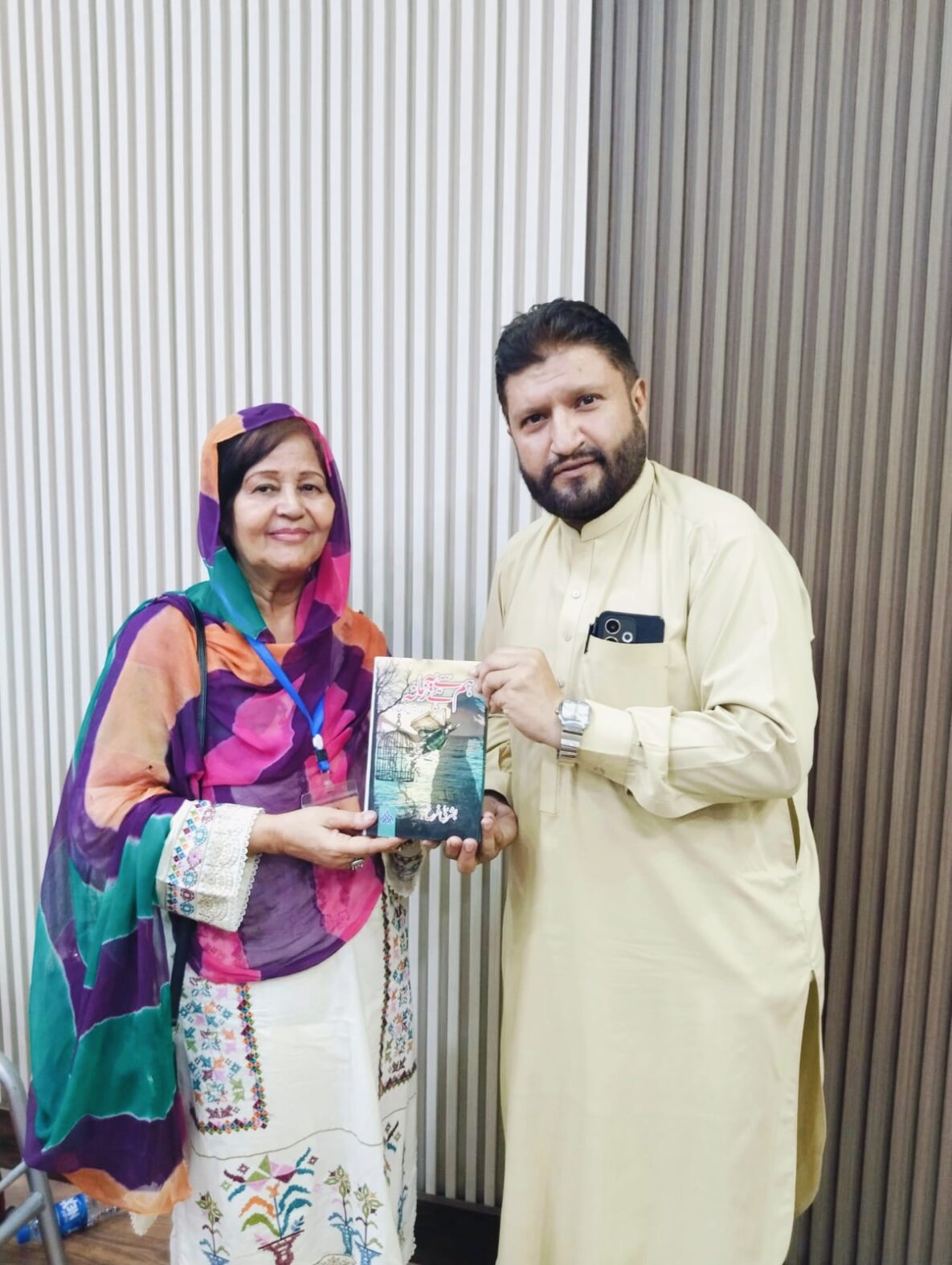
A few days ago, I had the opportunity to attend a literary event organized by the Karwan-e-Hawa Literary Forum at the Khana-e-Farhang Iran. At the conclusion of the event, the distinguished writer, poet, columnist, and literary figure of Khyber Pakhtunkhwa, Bushra Farukh, kindly presented me with a copy of her compiled book, “Hum Se Hai Yeh Zamana (Daughters of Khyber Pakhtunkhwa)”.
The moment I held the book, its cover immediately caught my attention. The image of a woman soaring toward freedom from a broken cage seemed to contain an entire story within itself. It did not symbolize defeat; rather, it represented resistance, self-confidence, determination, and liberation.
In today’s era of smartphones, social media, and short-form videos, reading a book from cover to cover is no easy task. Attention is easily diverted, and even the most interesting books often remain unfinished for days or weeks. The same is usually true for me. However, this book proved to be an exception.
After returning home, I opened the book intending to read only a few pages of Bushra Farukh’s own story, “From the Metaphorical to the Real.” Yet as I moved through the pages and learned about her struggles, patience, perseverance, and eventual success, my interest deepened. One story led naturally to the next, and before I realized it, I had lost track of time. What began as a brief reading session turned into an absorbing journey that continued late into the night.
“Hum Se Hai Yeh Zamana” is a collection of true stories of women from Khyber Pakhtunkhwa who faced hardships on different fronts of life but refused to surrender. Each narrative presents a unique world of experiences, and every protagonist stands as a symbol of resilience and determination.
“From the Metaphorical to the Real” is not merely Bushra Farukh’s personal story; it represents countless women who carve their own path despite overwhelming challenges. Her journey of raising daughters while confronting life’s hardships and eventually establishing herself in the literary world is deeply inspiring.
“The One-Eyed Girl” reminds readers that true limitations are not physical but mental. A tragic incident took away one of her eyes, but it could not diminish her courage. She proved that society’s labels do not define a person’s identity.
“Once There Was a Princess” tells the story of a young woman who transforms from vulnerability into strength. It is also a powerful reflection on motherhood and the courage it can inspire.
“Mother, To Whom Shall I Speak?” explores wounds that may fade with time but never completely disappear. The story serves as a stark reminder of the harsh realities and injustices that persist within society.
“We Are Rare and Hard to Find” portrays loyalty, sacrifice, and patience in a way that feels increasingly rare in the modern world. It reveals how much pain can lie hidden behind a smiling face.
“The Great Daughter of a Great Subedar” teaches that even those who appear strong and successful are often fighting invisible battles. Her determination in the face of illness and adversity is truly admirable.
“Windows of Memory” opens doors to a past filled with sorrow, deprivation, and social indifference. It encourages readers to reflect on how easily society overlooks the suffering of others.
“Love Is Not Easy” is a story of affection, trials, and spiritual devotion. It illustrates how difficult journeys can ultimately lead to profound fulfillment and healing.
In “My Lineage Is the Legacy of My Ancestors,” Maryam Bibi’s courage and self-confidence shine brightly. Building a meaningful life in a conservative tribal environment was far from easy, yet she proved that determination can overcome even the most formidable obstacles.
“All This Is the Legacy of Time’s Teacher” recounts Nilofar’s journey through early marriage, personal struggles, and eventual self-discovery. Her story demonstrates the power of perseverance and self-belief.
Reading the story of Atiya Hidayatullah, one realizes that some individuals possess the extraordinary ability to comfort others even while carrying immense personal pain themselves. Her strength and positivity are deeply moving.
The book concludes with the story of a renowned columnist and travel writer whose public success conceals a history of sacrifices and hardships. It reminds us that every achievement is often built upon struggles unseen by the world.
The greatest strength of Bushra Farukh’s “Hum Se Hai Yeh Zamana” lies in the fact that it does not portray women merely as victims. Instead, it presents them as powerful individuals capable of confronting and overcoming adversity. This is not a book of complaints; it is a book of courage. It is not a book of defeat; it is a book of resistance. It is not about tears themselves, but about the strength that emerges from them.
In my view, this book is particularly valuable for young readers, especially young women. It teaches that life is not a bed of roses, yet those who remain committed to their goals can find their way through even the most difficult paths. The daughters of Khyber Pakhtunkhwa featured in these pages demonstrate that when determination remains strong, barriers fall away and the journey toward freedom and achievement begins.
Indeed, Hum Se Hai Yeh Zamana is more than a collection of stories—it is a tribute to the indomitable spirit of women who refused to let circumstances define their destiny.
