By Junaid Qaiser
The Shangri-La Dialogue is a key event in the Asia-Pacific region, known for being one of the largest and most significant multilateral defense and security discussions. This year, Pakistan’s message was particularly striking, marked by a sense of urgency and clarity.
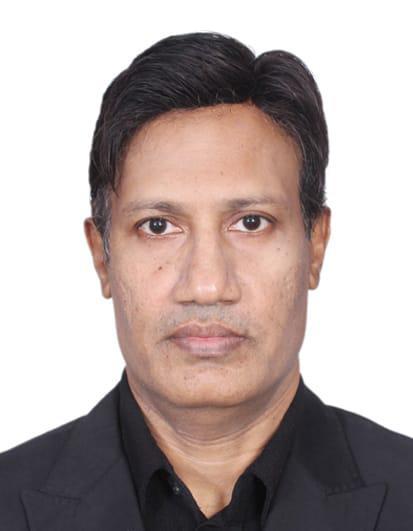
Lieutenant General Nauman Zakria, Commander of Pakistan’s I Corps, used the international platform not merely to discuss military affairs, but to underline a broader strategic reality emerging in South Asia after the May 2025 Pakistan-India conflict. His remarks reflected a growing belief within Pakistan’s security establishment that the old assumptions about limited war between two nuclear powers are becoming increasingly dangerous and unrealistic.
The May confrontation between Pakistan and India began after an attack on tourists in occupied Kashmir, which New Delhi quickly blamed on Pakistan without publicly presenting verifiable evidence. Islamabad denied involvement and demanded an impartial investigation. However, within days, tensions escalated dramatically after Indian air strikes targeted areas in Punjab and Azad Kashmir.
Pakistan responded forcefully. The crisis rapidly evolved into a dangerous military standoff involving aerial combat, strikes on military installations, and aggressive information warfare. Although the ceasefire eventually came through international intervention, especially from the United States, the episode left behind an unmistakable lesson: escalation in South Asia is becoming faster, more unpredictable, and far more difficult to control.
This was the central theme of Lt Gen Zakria’s speech at Shangri-La.
His statement that Pakistan’s “resolute response” had debunked the idea of space for war in South Asia was not simply rhetorical posturing. It was a strategic warning. For years, many analysts believed India could engage in controlled conventional military operations against Pakistan without triggering broader escalation. The events of May 2025 appear to have challenged that assumption.
The reality is that modern warfare no longer operates within traditional boundaries. Conflicts today unfold across multiple domains simultaneously — cyber operations, electronic warfare, artificial intelligence, satellite surveillance, information manipulation, and digital infrastructure attacks all shape the battlefield before conventional combat even fully begins.
Pakistan’s military leadership believes the recent conflict demonstrated the effectiveness of integrated, multi-domain operations backed by coordination among air, land, cyber, intelligence, and strategic communication capabilities. Whether viewed from Islamabad or abroad, the confrontation highlighted how rapidly military exchanges between nuclear rivals can escalate under modern technological conditions.
Nevertheless, perhaps the most important aspect of Zakria’s address was not about military capability at all. It was about responsibility.
At a time when major powers are locked in technological competition, Pakistan’s message focused on the need for restraint, communication, and international norms governing emerging technologies. Zakria warned that artificial intelligence, autonomous systems, cyber tools, and space technologies are compressing decision-making timelines and increasing the risk of miscalculation.
South Asia remains particularly vulnerable because political dialogue between Pakistan and India often collapses precisely when it is needed most. Crisis communication mechanisms remain weak, while nationalist rhetoric on both sides frequently overwhelms diplomatic space. Under such conditions, even limited incidents carry the risk of spiraling into larger confrontation.
This is why Zakria’s emphasis on institutionalised communication channels deserves serious attention. Strategic stability cannot survive on deterrence alone. Nuclear weapons may prevent full-scale war, but they do not eliminate crises, accidents, or miscalculations. History has repeatedly shown that communication between adversaries is often the only barrier preventing escalation from turning catastrophic.
The speech also reflected Pakistan’s broader geopolitical positioning in an increasingly polarised world. Zakria described China as a constructive and stabilising factor contributing to regional balance and economic cooperation. This aligns with Islamabad’s continuing effort to position itself within emerging regional connectivity frameworks while maintaining strategic equilibrium amid intensifying great-power competition.
Equally significant was his focus on societal resilience. Modern warfare targets societies as much as armies. Cyber disruption, disinformation campaigns, political polarisation, and attacks on institutional trust have become central tools of strategic competition. Countries unable to protect public trust and strengthen digital resilience become vulnerable long before any conventional military defeat occurs.